Styling
Multi-ASIN
Videos
Overview
From Product Showcase to Brand Discovery Engine
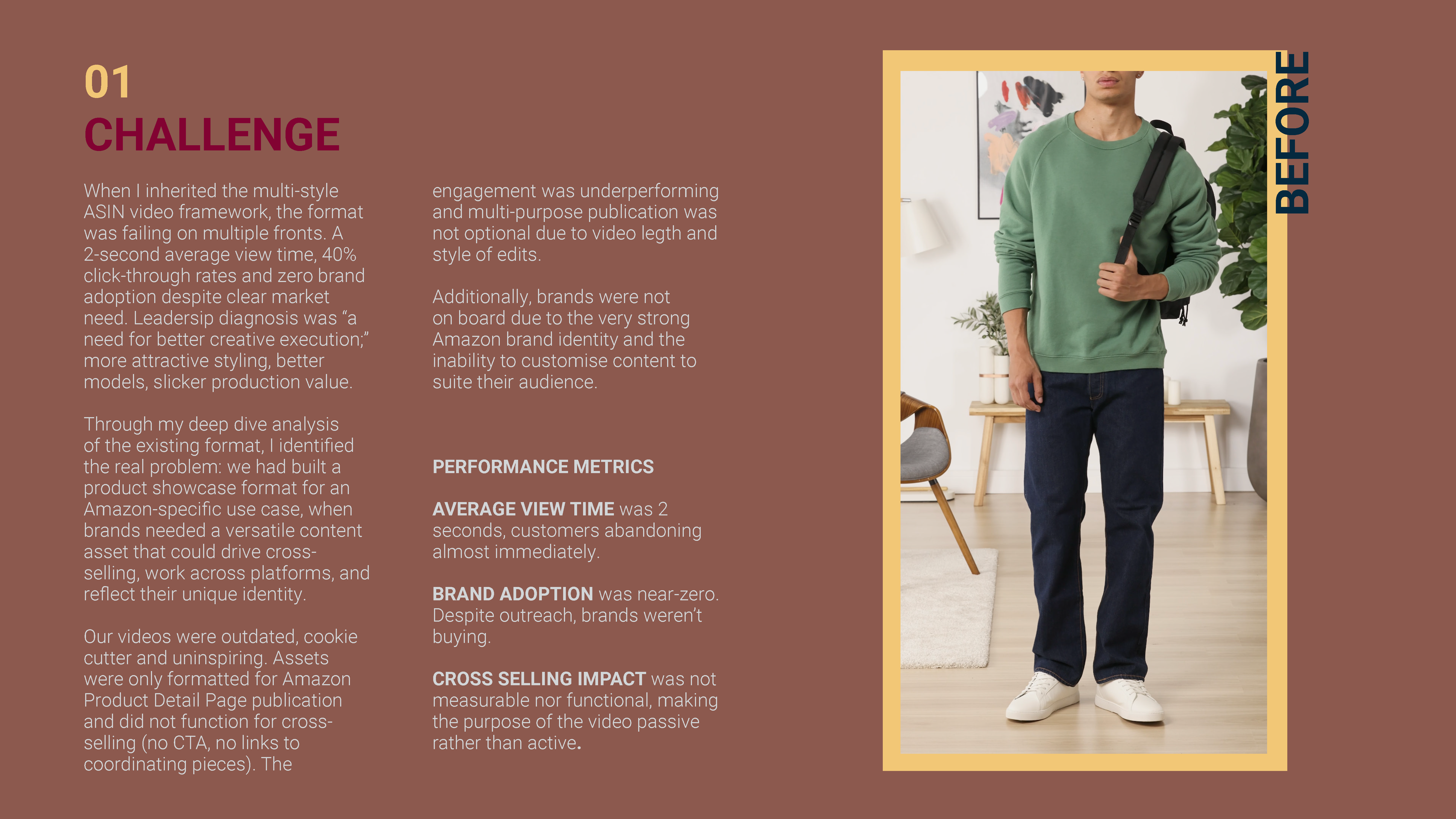
When I inherited the multi-style ASIN video framework, the format was failing on every front: a 2-second average view time, 40% click-through rates, and zero brand adoption despite clear market demand. Leadership's diagnosis was "better creative execution." My diagnosis was a fundamental format problem.
We had built a product showcase optimised for Amazon's needs. Brands needed something entirely different — a versatile content asset that could drive cross-selling, deploy across platforms, and reflect their unique identity. The format needed a complete reinvention.
The Challenge
Four Problems. One Root Cause.
A deep dive revealed that poor engagement metrics were symptoms of a single fundamental flaw: we'd optimised the format for Amazon's distribution needs, not for the intersection of what customers, brands, and the business actually required.
Strategy
Built for Every Stakeholder. Not Just One.
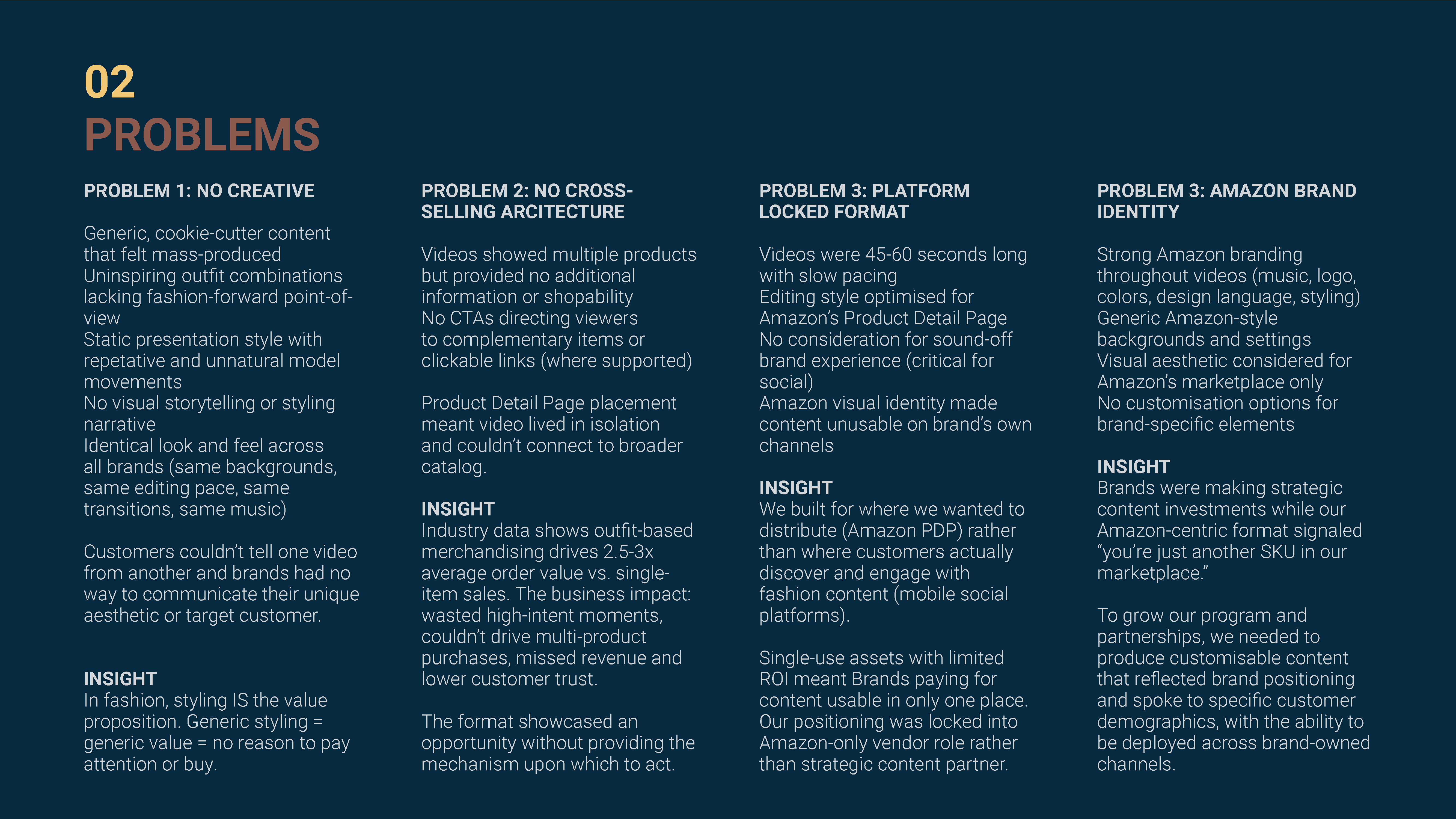
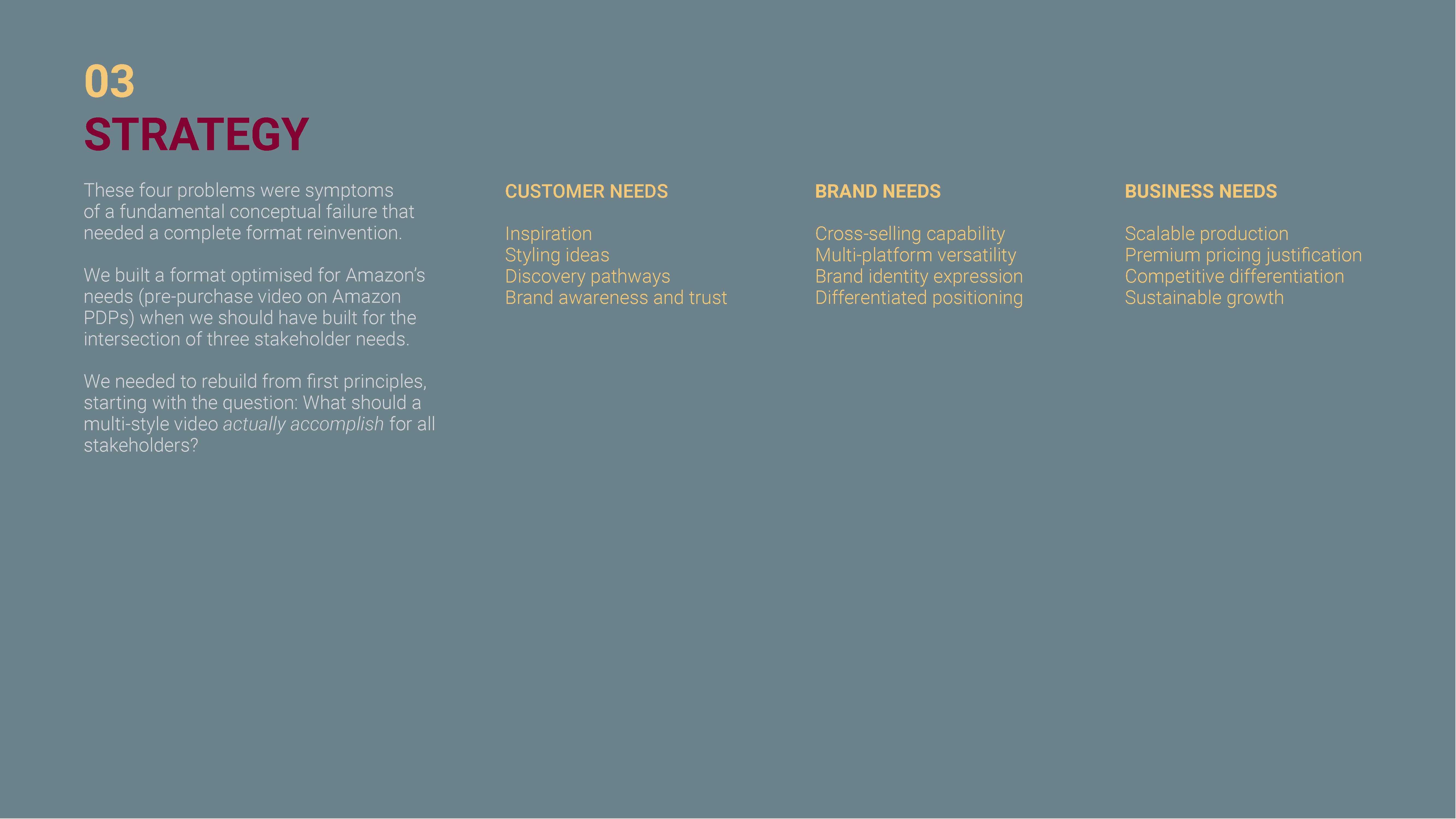
The four problems were symptoms of a fundamental conceptual failure. We built a format optimised for Amazon's needs when we should have built for the intersection of three distinct stakeholder needs. The strategic question became: what should a multi-style video actually accomplish for all three?
Customer needs: inspiration, styling ideas, discovery pathways, brand trust. Brand needs: cross-selling capability, multi-platform versatility, brand identity expression. Business needs: scalable production, premium pricing justification, competitive differentiation, sustainable growth.
Format Transformation
Old Format vs. New Format
| Dimension | Old Format | New Format | |
|---|---|---|---|
| Purpose | Product display | → | Outfit discovery + cross-selling tool |
| Audience | Amazon shoppers on product page | → | Fashion customers across full discovery journey |
| Function | Demonstrate product versatility | → | Storytelling + cross-sell + brand expression |
| Distribution | Single platform (Amazon) | → | Cross-platform: Amazon + social + owned channels |
| Branding | Amazon-centric | → | Brand-centric with full customisation |
| Business Model | Transactional production service | → | Strategic content partnership |
Execution
Three Creative Pillars
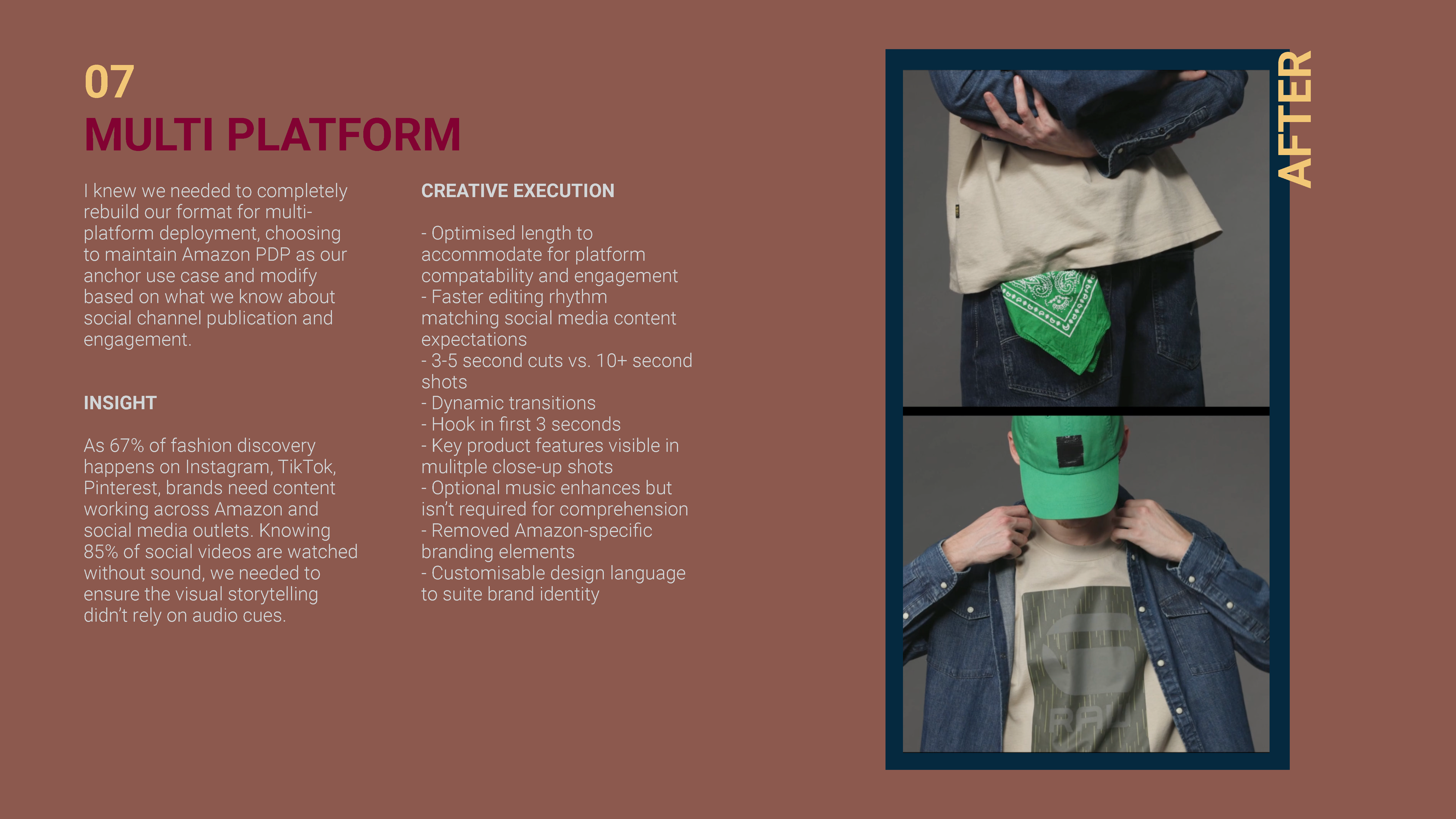
New video framework: hero product in a dynamic opening (0–3s), quick-cut montage with split-screen showing feature elements, styling shown in realistic scenarios — walking, sitting, real life. Varied camera angles and natural model movement throughout.
Asset quality elevation: adjusted lighting for a refined, moody look; sophisticated camera movement; colour grading for cohesive visual mood; model casting updated to reflect premium brand markets.
Strategic product selection: complementary items at different price points, accessible and premium upsell options, current inventory, items spanning main wardrobe categories and multiple customer segments.
Actionable CTA framework: platform-specific options selected at intake — "Link in bio to shop the look," "Shop Now," "Available on Amazon." Impact: 38% of viewers engaged with complementary products, 21% cross-sell conversion rate.
Customisable parameters: Set (background, brand colours, up to 2 props), Talent (diverse casting roster, max 4 non-competing brands per model), Branding (logo placement options, colour scheme), Audio (music aligned with brand tone, or brand-owned music).
Multi-platform rebuild: 3–5 second cuts, dynamic transitions, hook in first 3 seconds, sound-off compatible, customisable design language per brand. Result: 94% brand satisfaction rate.
"This looks like our brand. It doesn't look like Amazon content — it looks like us."
— Brand Partner Feedback, Post-Launch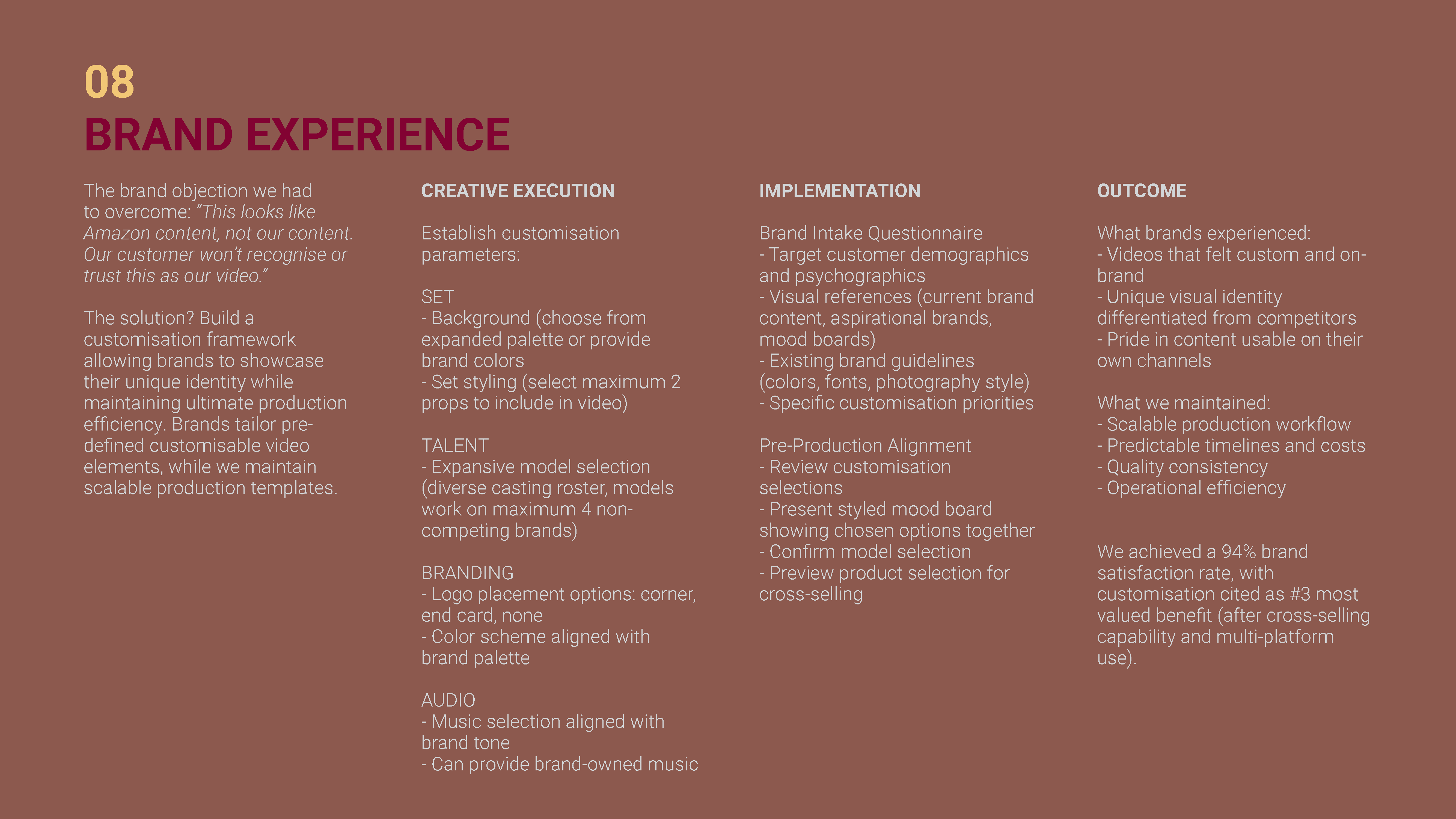
Results
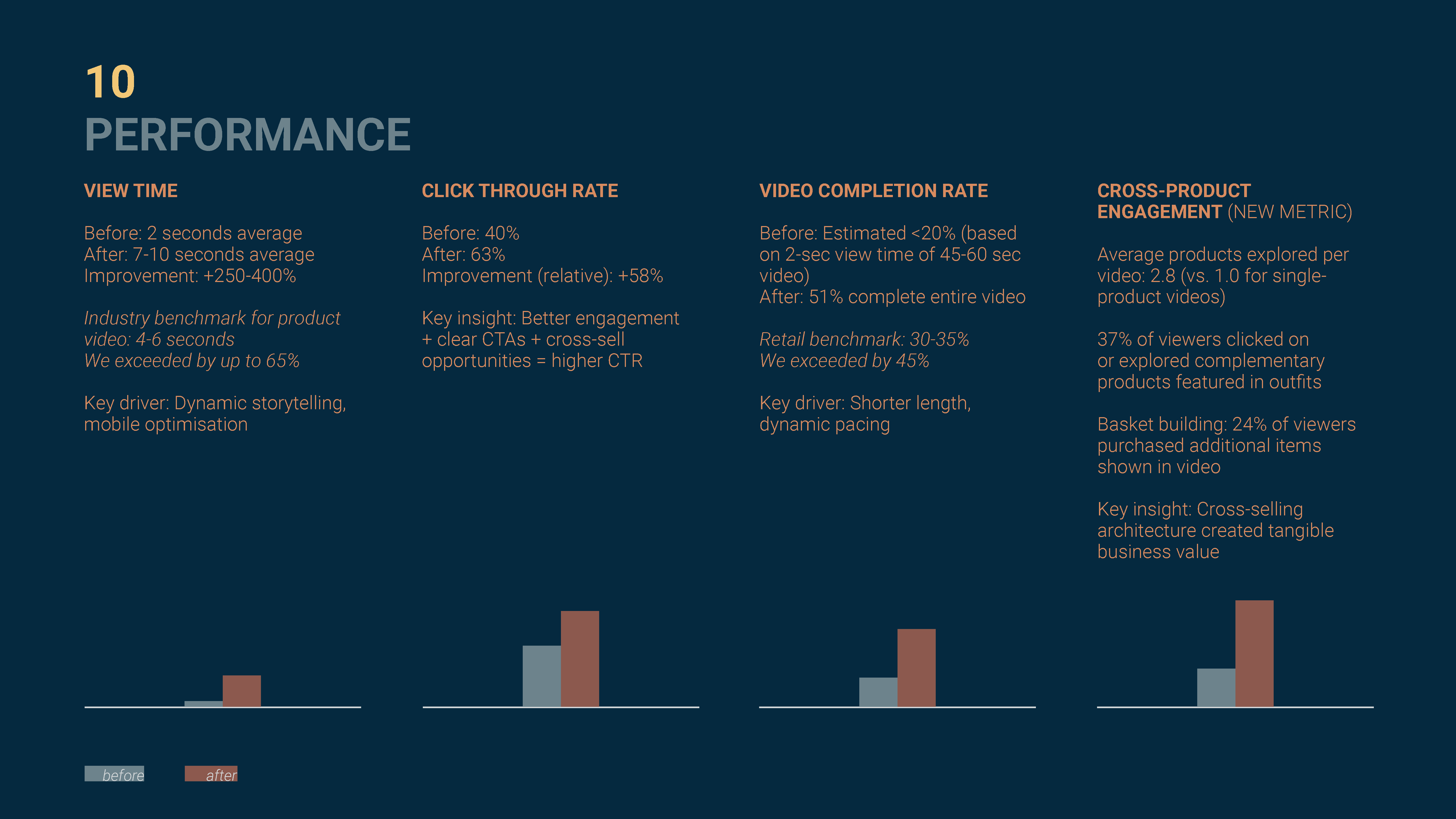
Every Metric. Transformed.
Impact
From Commodity to Strategic Partner
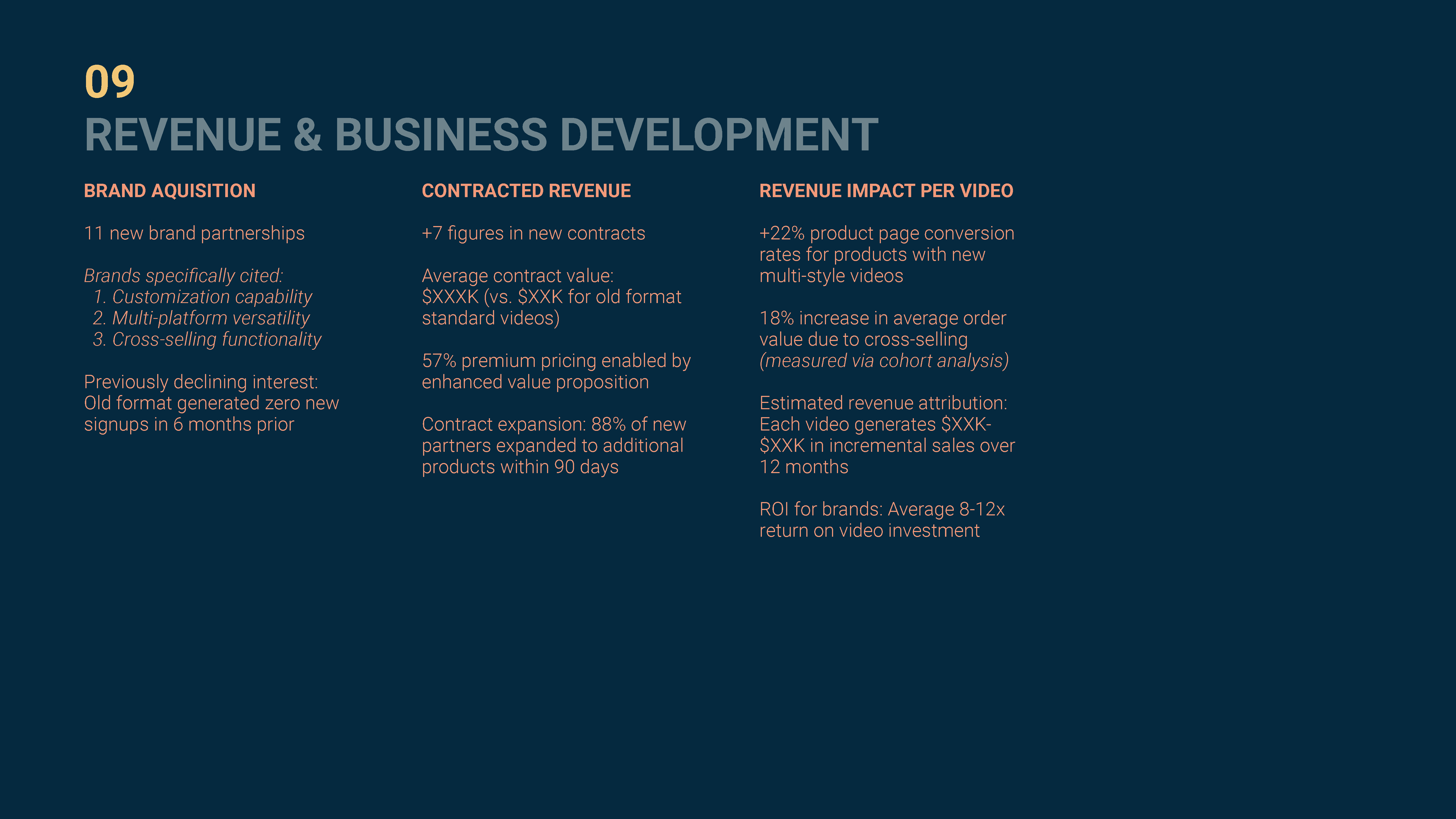
The transformation moved the business from a transactional, commoditised service position — competing on price — to a strategic content partnership model competing on value and customisation. Brands weren't just buying videos for their Amazon product pages. They were buying content that looked like their brand, that worked across every platform they operated on.
The format itself became the differentiator. Customisation capability, multi-platform versatility, and cross-selling functionality were the top three reasons brands cited for signing new contracts — none of which existed in the previous format.
"We needed to rebuild from first principles, starting with the question: what should a multi-style video actually accomplish for all stakeholders?"
— Lolo Jones, Creative Director & Strategist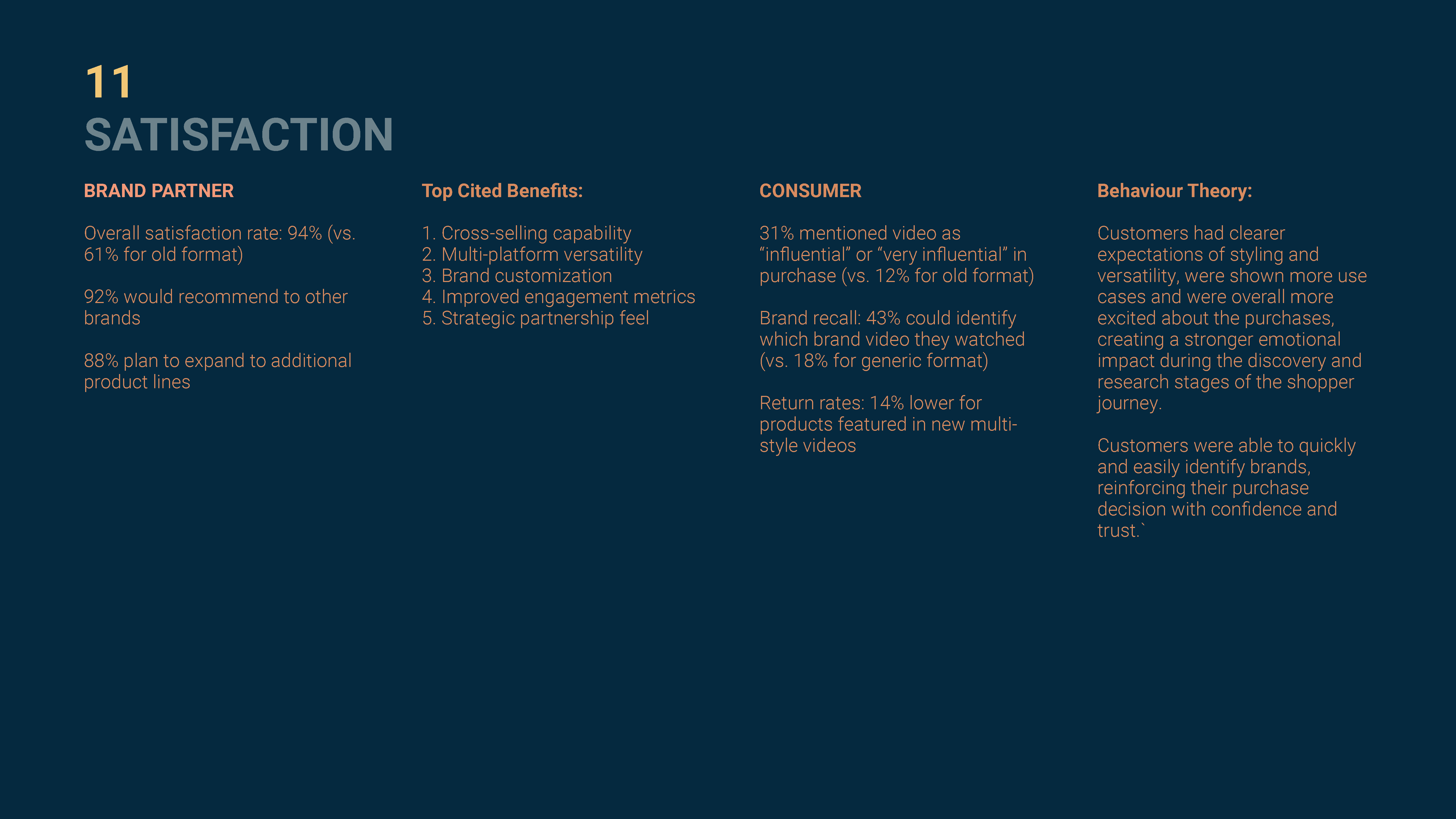
Campaign Videos
Before
After